Green Roof Testing at MOST
Green roofs are an increasingly adopted form of green infrastructure that provide stormwater management, building insulation, and urban heat island mitigation. However, their design and implementation in Western Canada and other cold-climate regions remain limited, largely due to uncertainty surrounding system performance under harsh winter conditions.
The GREEN roof testing apparatus at the MOST Facility supports research into green roof design and performance in cold climates, helping advance design principles and reduce the uncertainty and risks associated with implementing these systems in colder environments.
Why use Green Roof Technology?
-
Reduction of CO2 emissions
-
Improvement of stormwater management
-
Enhancement of air quality
-
Reduction of urban heat island effects
-
Increased building energy efficiency
-
Provide habitats for animals
-
Addition of enjoyable green-space
The GREEN Apparatus
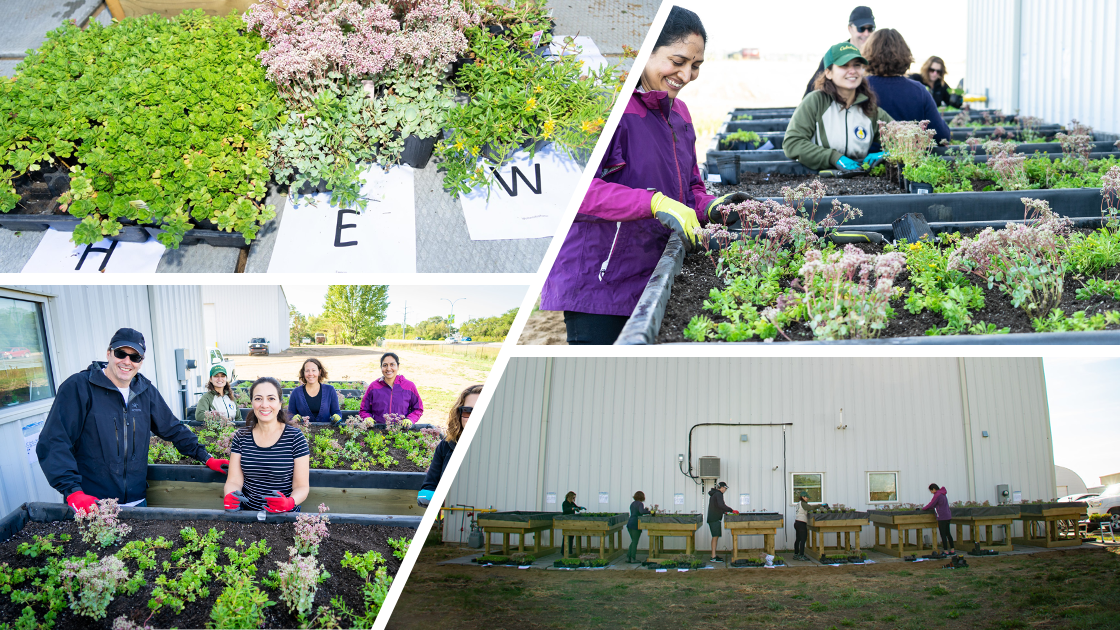
Like other research systems at MOST, the GREEN apparatus bridges the gap between small- and large-scale research. In this case, between small-scale laboratory experiments (e.g., soil cores) and the complexity and expense of full-scale constructed green roofs. Developed as a cold-climate green roof research platform, the apparatus was established through partnerships and funding from USask, Western Economic Diversification Canada, Soprema, Titan, Higher Groundwork Horticulture, and the University of Toronto's GRIT Lab, whose testing systems provided the foundation for its design.
The modular system allows researchers and industry partners to investigate green roof design and performance, including drainage and waterproofing systems, substrate composition, vegetation selection, water retention and quality, irrigation requirements, and the thermal performance of green roof assemblies.
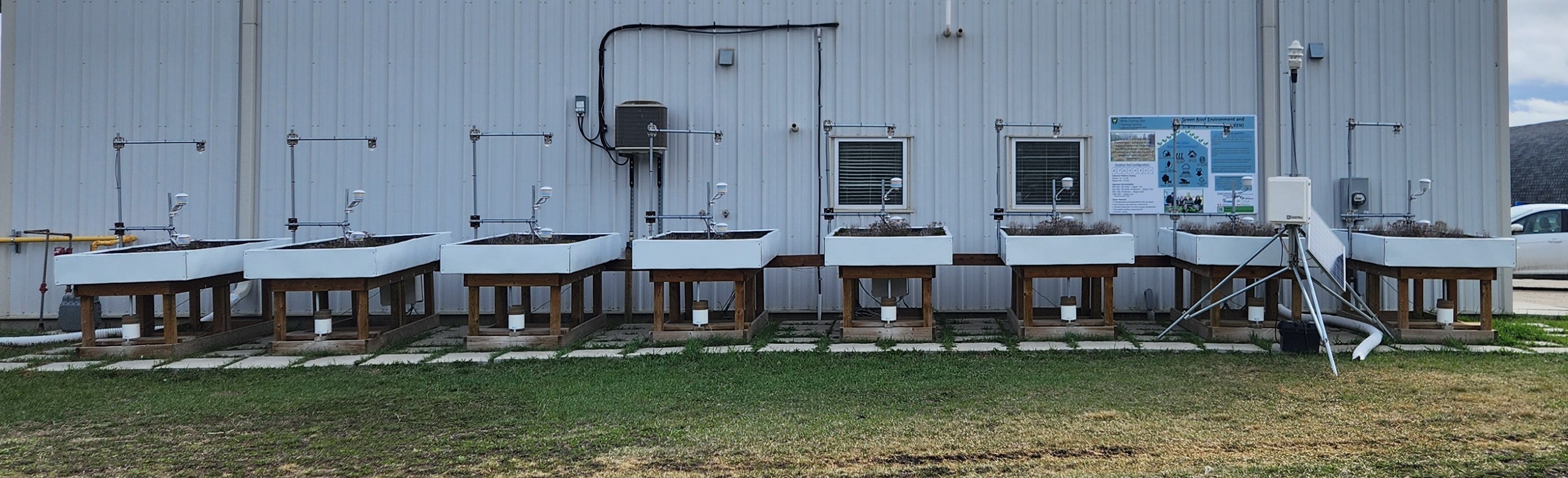
The apparatus consists of:
- Eight customizable outdoor test roofs: Each providing 3 m² of roof area and exposed to local climatic conditions. Each physically replicates roof assemblies including water-proof membranes and drainage layers.
- Meteorological monitoring: An outdoor weather station recording air temperature, precipitation amount and type, atmospheric pressure, relative humidity, and wind speed and direction.
- Integrated instrumentation: Each test roof is equipped with two soil and two air temperature sensors, a soil volumetric water content and electrical conductivity sensor, an infrared radiometer for measuring roof surface temperature, and baseflow fed tipping-bucket monitoring for quantifying drainage outflow.
Interested in Green Roof Testing at MOST?
The GREEN apparatus at MOST can be accessed via collaborative research partnerships and fee-for-service projects.
For more information on green roof testing partnerships with the MOST facility
Research Questions
Initial research with the GREEN apparatus focused on addressing fundamental uncertainties surrounding green roof design in cold climates, with three primary questions:
- What substrate depth and composition are required to meet vegetation water requirements?
- Which vegetation species can withstand prolonged, harsh Saskatchewan winters?
- Can selected species survive dry growing seasons with minimal supplemental irrigation?
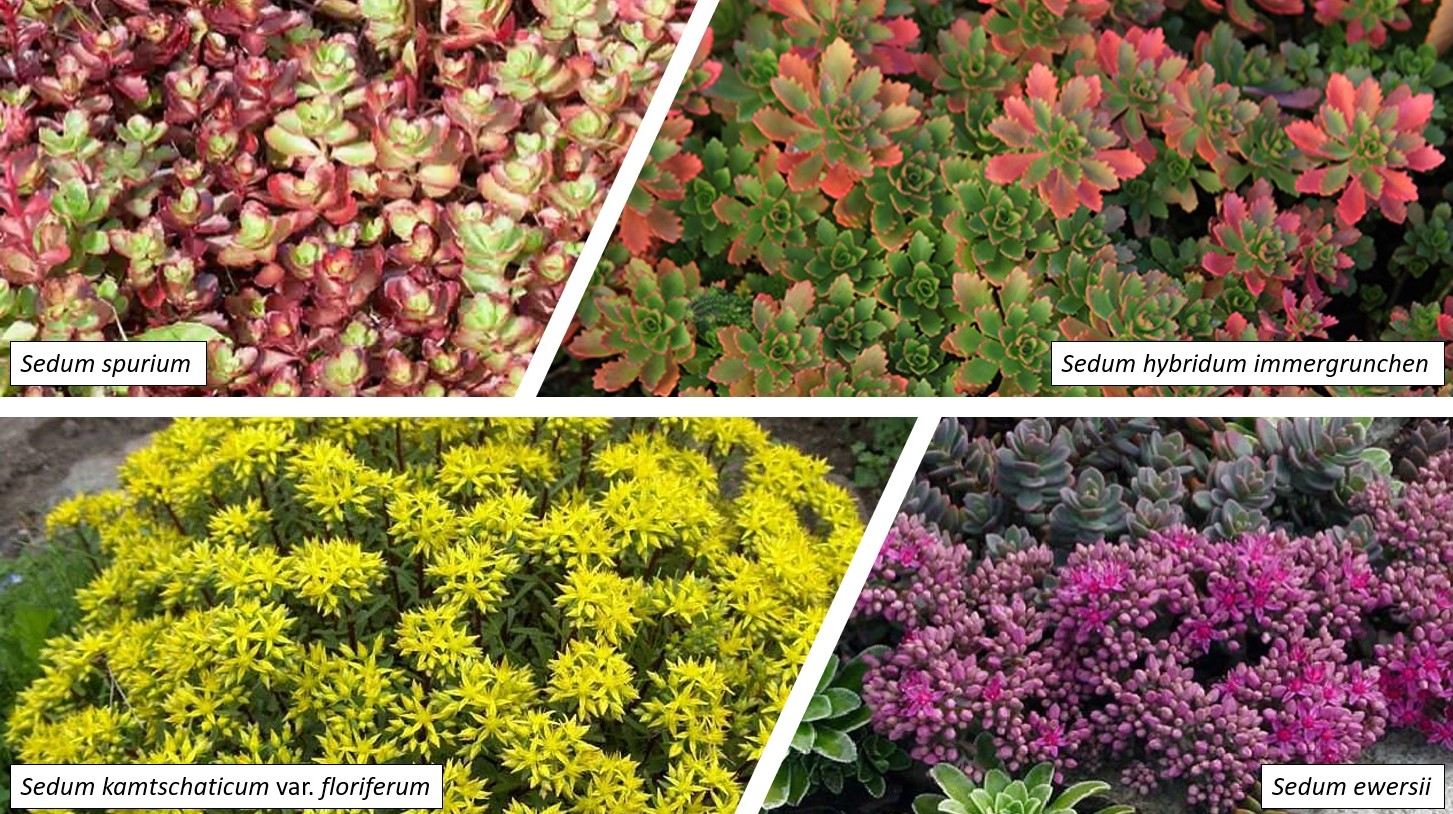
To investigate these questions, the initial experiments evaluated two substrate depths (10 and 15 cm), four substrate mixtures based on Soprema Sopraflor X with varying additions of biochar (provided by Titan) and shale, and four vegetation species:
- Pink Mongolian stonecrop (Sedum ewersii)
- Little evergreen stonecrop (Sedum hybridum 'Immergrünchen')
- Orange stonecrop (Sedum kamtschaticum var. floriferum)
- Dragon's blood stonecrop (Sedum spurium)
Ongoing Research
The GREEN apparatus has operated continuously since 2018, providing a long-term baseline dataset of green roof hydrological and environmental performance. Since 2022, students in USask's Master's in Water Security program have conducted annual water stable isotope tracing experiments during the growing season to investigate water retention, storage, and release dynamics across the test systems. More recently, students have used the long-term monitoring dataset to calibrate and refine the HYDRUS-2D model for simulating water movement through green roof systems.